Thick brush can hide a whole lot of hillside. On this property in North Granby, Connecticut, it was hiding rock walls, boulders, and more rough ground than even the homeowner remembered. It was also blocking the view from the hot tub deck.
Watch the time lapse on YouTube: “Can One Excavator Tame These Overgrown Hillsides? | Forestry Mulching”
The goal was straightforward: spend one day knocking back the overgrowth so the customer could maintain it himself going forward. I brought the Kubota KX040-4 excavator with the Indeco IMH4 forestry mulcher head, and the plan was to get everything I could reach.
That last part turned out to matter quite a bit. The brush was manageable. What was underneath it set the limits.
Walking the property and setting the plan
We had several separate areas to tackle, starting with the thick hillside alongside the driveway. The road ran above it, mostly hidden behind the vegetation, with power lines giving a little indication of where it was.
I knew there was a rock wall somewhere in that slope. A few stones were visible through the brush, but it was hard to tell exactly where the wall ran or how much of the hill it would keep me from accessing.
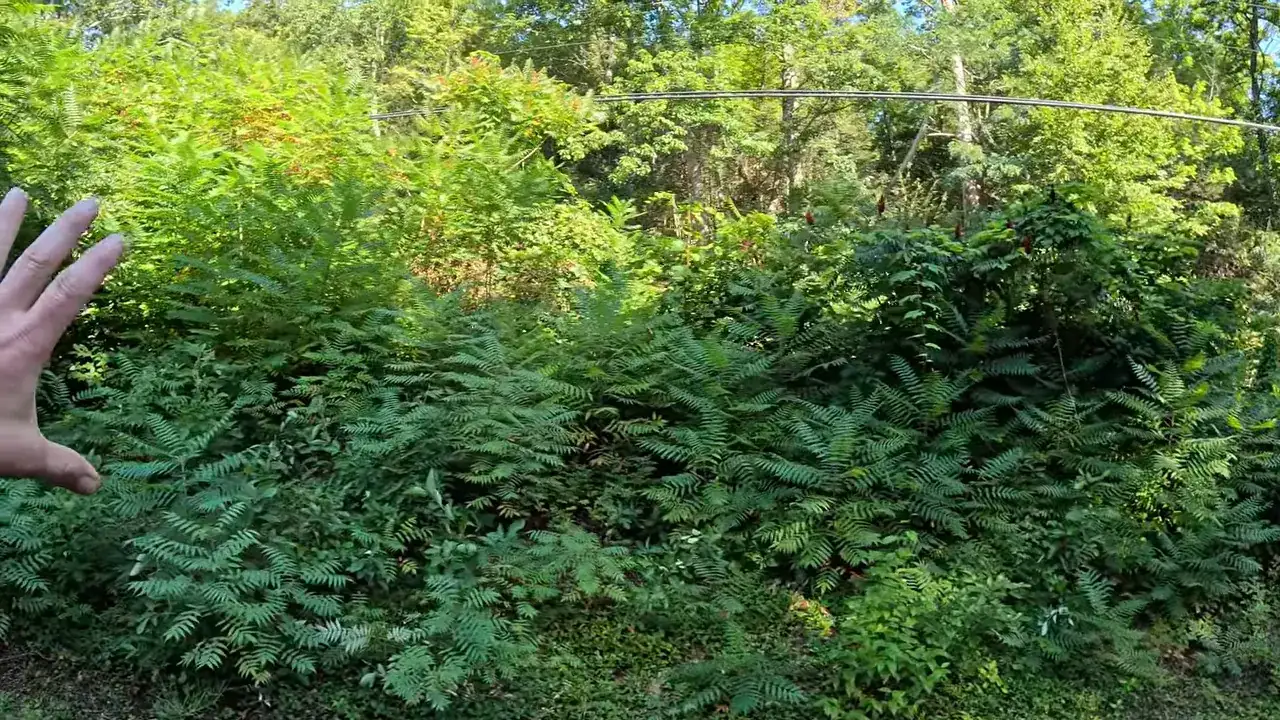
The customer understood that going in. The agreement was to clear everything I could reach, with the terrain determining how far I could go. We expected some obstacles, and we also knew there could be things neither of us could see yet.
The day’s work broke down into three main targets:
- Clear the accessible brush along the driveway hillside, continuing down toward the bottom.
- Knock back the vegetation below the house and deck to open the view.
- Work through the separate patch of sumac and finish the remaining smaller section.
It was a beautiful spot, and getting those areas opened up would make a substantial difference without needing to change the shape of the land.
A lot of staghorn sumac, and a machine that could reach into it
Much of the larger growth was staghorn sumac, not poison sumac. It grinds up pretty easily, but it also grows like crazy. I tend to think of it as a weed doing a convincing impression of a tree.
For anyone sorting out plant names before a clearing project, NC State Extension has a useful staghorn sumac reference. The identification matters, even when the immediate job is simply getting an overgrown area back under control.
For this job, the excavator carried the mulcher into position and reached into the brush from the ground I could access. The head processed the vegetation on site, leaving the cut material on the hillside rather than creating a separate brush pile to haul away.
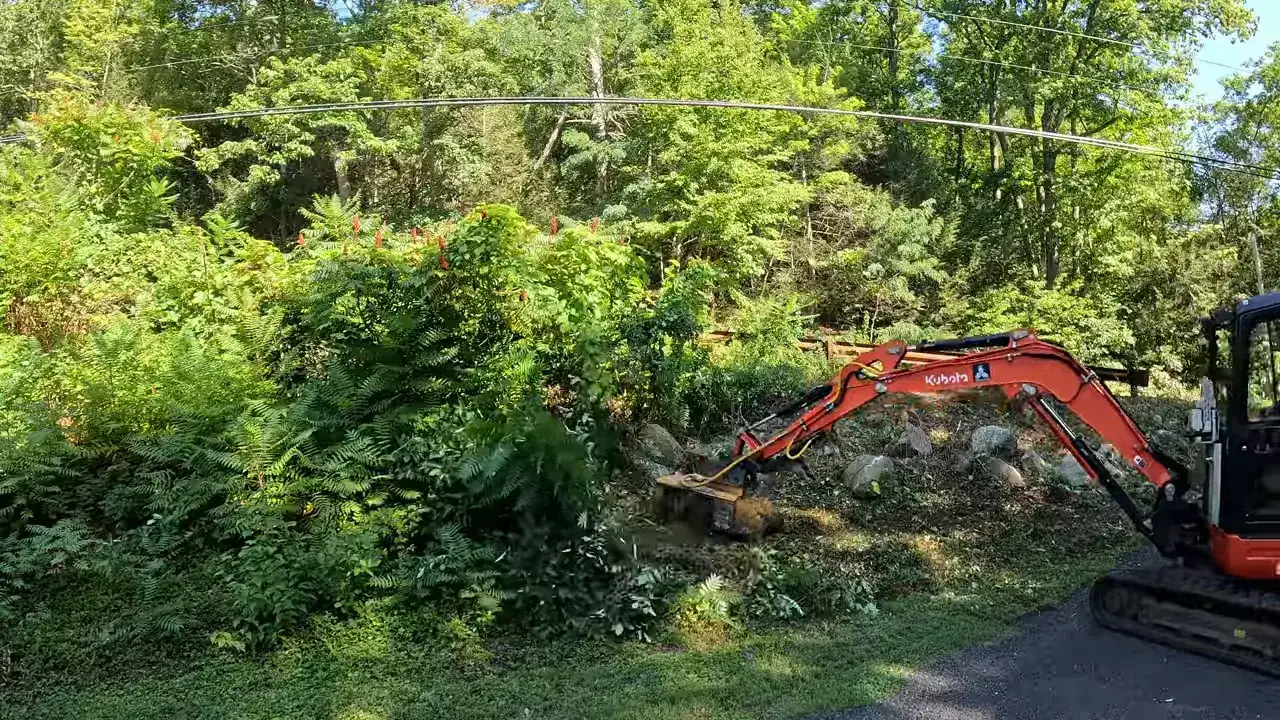
As the standing growth came down, I could see more of the slope and work through the newly exposed areas. Some sections opened up nicely. Others immediately explained why I wasn’t going to get much farther uphill.
Vegetation that is easy to mulch does not necessarily mean the site will be quick to clear.
The hidden rocks slowed everything down
By the lunch-break walkthrough, I was making good progress, but it was definitely taking longer than I had expected. The main reason was rock.
Not just the wall we already knew about, either. There was rock underneath much of the vegetation on the hillside. The customer hadn’t realized how much was buried in there.
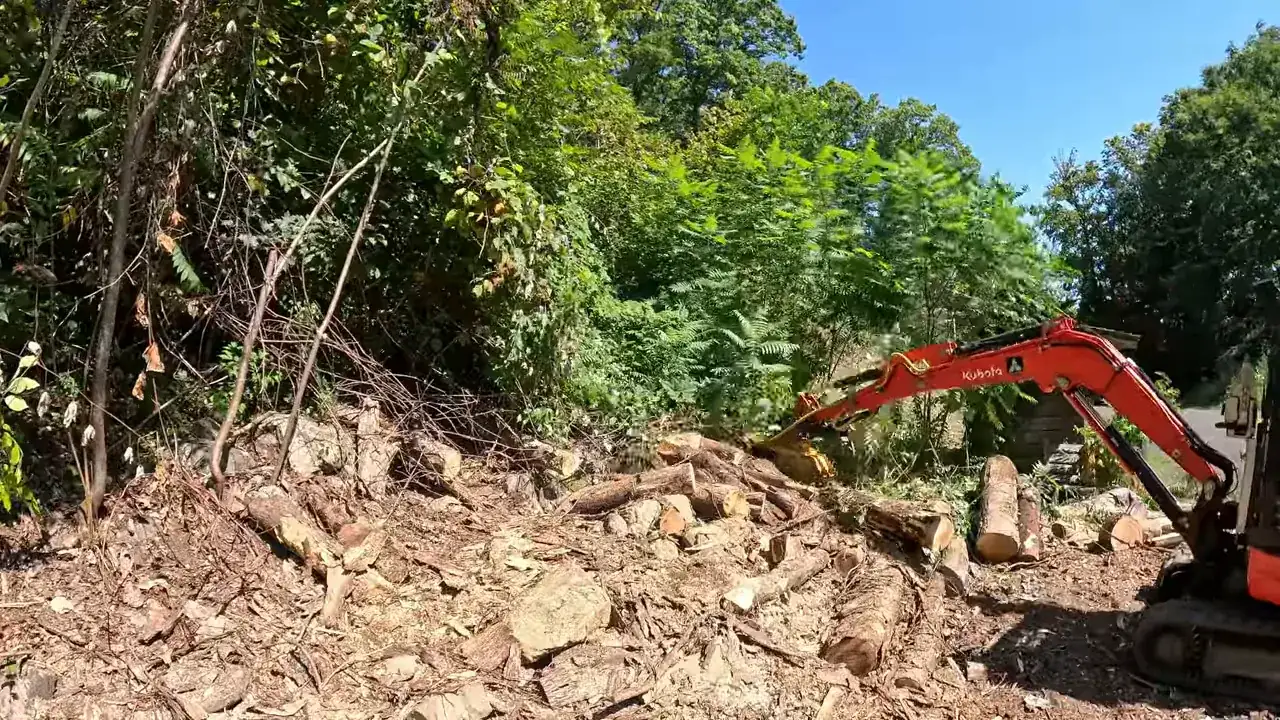
That affected the work in two ways. It slowed the mulching itself, and it limited where I could position the machine to reach higher growth. Having more vegetation above me didn’t mean I had a workable route up to it.
The stopping point wasn’t how much brush the head could process. It was where I could get the excavator and what I could reach from there.
Fortunately, the customer was understanding. We’d already talked about known obstacles and the possibility of unknown ones, so the exposed rock wasn’t a surprise to our agreement, even if it was a surprise on the property.
There were some nice discoveries mixed in, too. A large boulder near the little shed emerged from the growth. The homeowner remembered it once it was visible, but had forgotten it was there.
Even with some upper areas out of reach, the first stretch came out well. Instead of a solid wall of vegetation, the bank was open enough to see its actual contours, stones, and features.
Opening the view below the hot tub deck
The next major area was below the house. Brush and small trees had grown up in front of the deck, blocking the view down across the property.
I’d already made a small start before walking through this section on foot. From a distance, it looked like another patch of mostly sumac that ought to mulch fairly easily. Up close, the terrain had another say in the matter.
There was a sharp, steep drop tucked into the growth. Once again, the question wasn’t simply whether I could grind the plants. It was how much of the patch I could reach without needing to climb ground that was too steep.
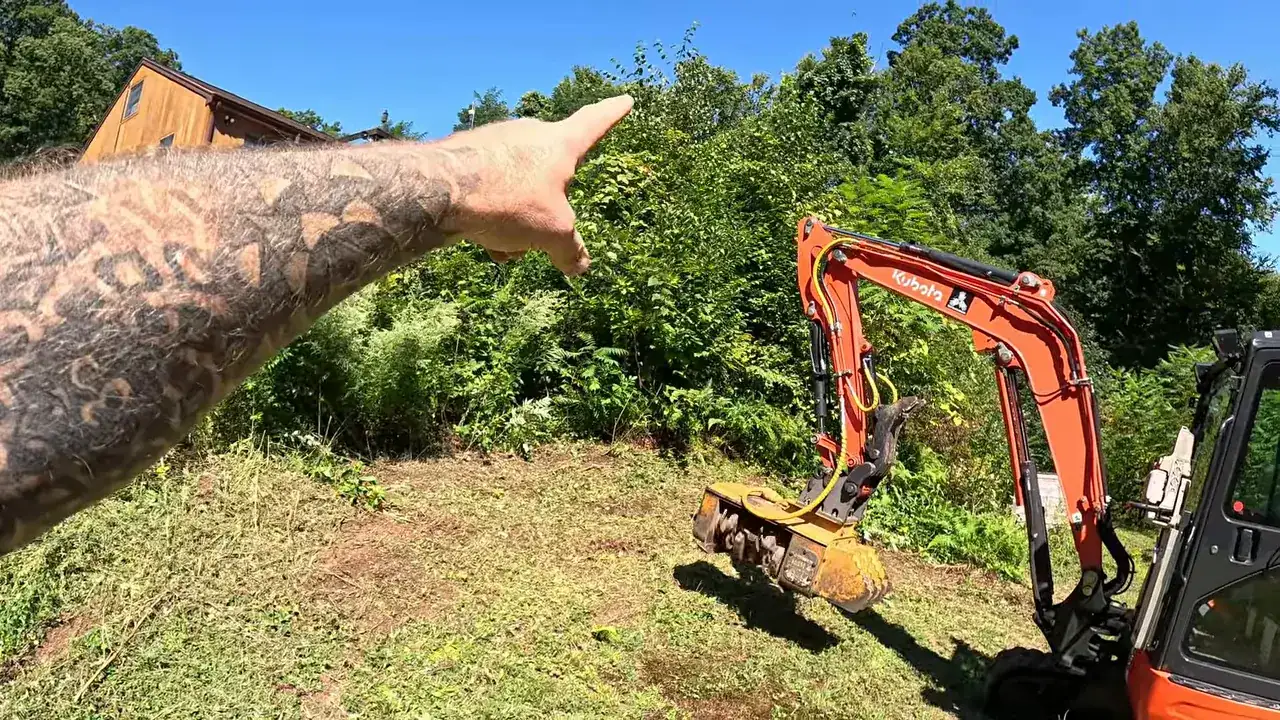
I worked through the accessible growth and kept opening the hillside. With the tall vegetation down, the improvement was substantial. The view from the hot tub area extended down the slope instead of ending in a screen of brush.
A small bit remained near the upper part of the bank. That slope was too steep for me to climb with the machine, and I’d reached as much as I could from below. The customer is handy and planned to take care of that remaining growth himself.
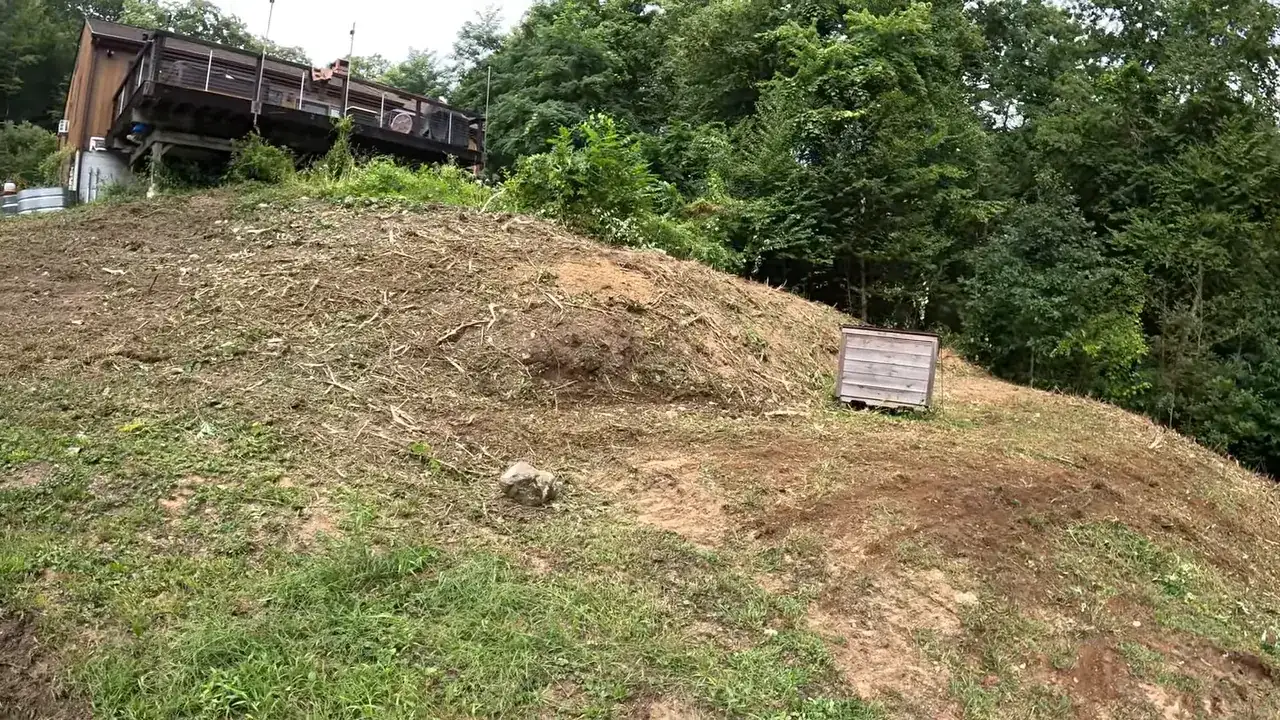
That was a good outcome for the purpose of this job. We weren’t trying to make every inch of a rocky slope look like lawn. We were knocking back the heavy growth, restoring the view, and getting the property into a condition the homeowner could take over.
One last section, then the final walkthrough
After finishing below the deck, I headed back up to take care of the last smaller section. Then it was time to load the excavator and walk the first hillside again.
The difference was especially obvious along the driveway. What had looked like an almost continuous mass of greenery now showed the rock wall, individual boulders, and a large accumulation of stone that had been mostly hidden.
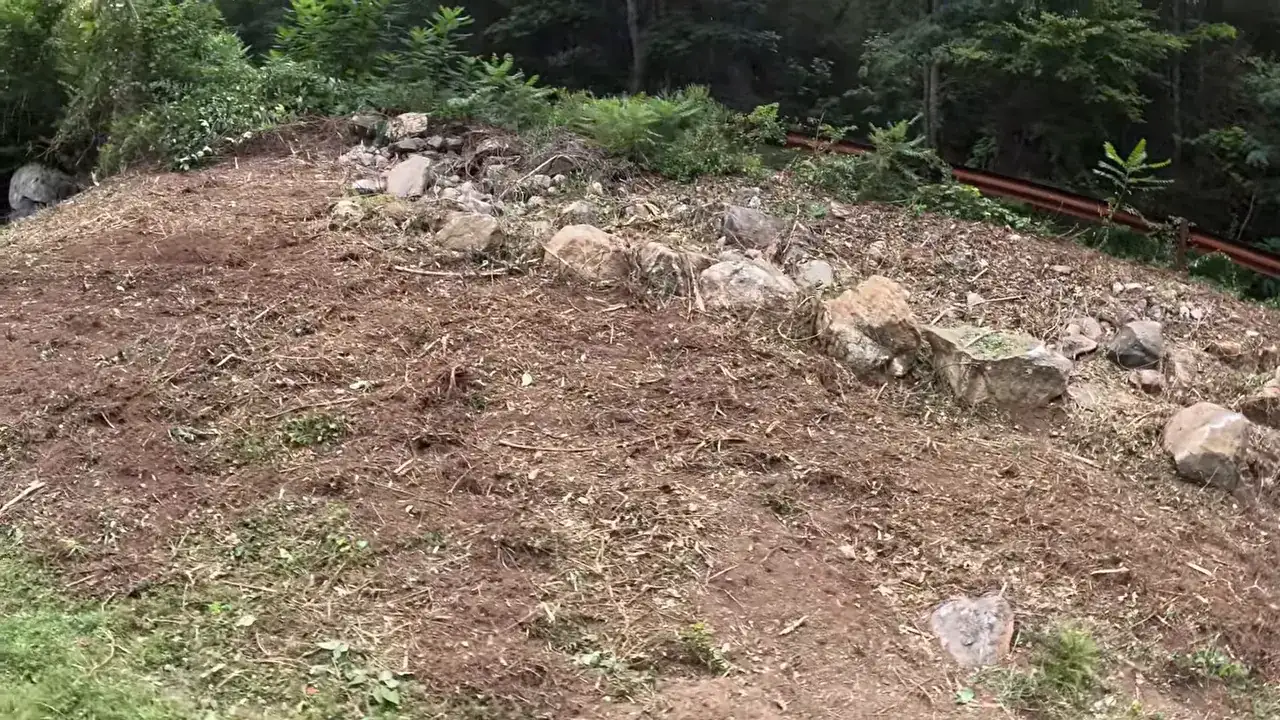
The homeowner mentioned again that he hadn’t known all those rocks were there. A few had been partly visible, but the amount uncovered was a genuine surprise.
Was it a little disappointing not to get farther uphill? Sure. But that’s forestry mulching sometimes. You start by clearing brush and end up uncovering a few mysteries.
One excavator made a big improvement in a single day, but the rocks and steep slopes still set the boundaries. The accessible brush was mulched on site, the view below the deck was opened up, and the customer had a much more manageable starting point for ongoing maintenance.
The customer was happy, which meant I was happy. Loaded up, job done, time to head home.
Got a hillside hiding behind the brush?
Tell us about your property and we’ll come take a look. Family-run, based in Barkhamsted, serving Northern CT and Southern MA.