We pushed the forest edge back about five or six feet around two fields at an old farm in Canton, CT. The goal was to clean up the perimeter, open views into the woods and take back ground that brush and vines had been slowly claiming. Along the way we found a brush hog, an old mower, a couple of implements we couldn’t put a name to, some barbed wire and a steel pipe.
Watch the time lapse on YouTube: “This Old Farm Was Hiding Rusty Equipment | Forestry Mulching Time Lapse”
The plan: reclaim the field edges, not clear the forest
We had worked on a smaller part of this property the year before. This time the customer wanted the whole perimeter cleaned up. It was edge work, not wholesale clearing, mostly low, thick growth between the maintained lawn and the trees. Brush and vines had slowly pushed the mowing line out into the field. In one section a stone wall ran under the growth, and it marked where we stopped.
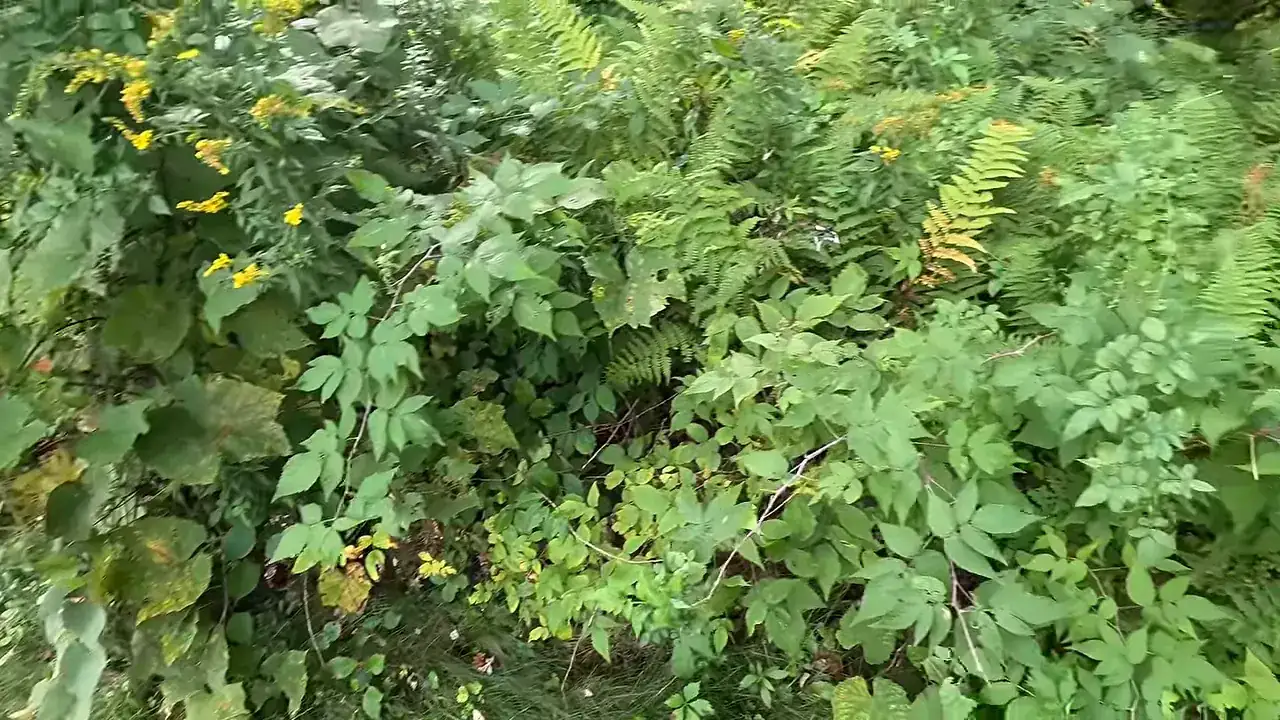
Marking what was hiding in the brush
The customer had marked the obstacles they knew about, but some things were buried in the vegetation. We ran our Kubota KX040-4 excavator with an Indeco IMH4 mulcher head and worked around standing trees, the stone wall and the old machinery. Marked obstacles don’t rule out hidden ones.
On an old property, plan for surprises under the brush even when the obvious hazards are flagged.
Day one: brush clearing with a few rusty surprises
- A brush hog. One of the first finds. It was newer than a plow we had come across earlier, and its basic design is still common, though the rear linkage looked modified.
- Barbed wire. A short length wrapped up in the mulcher. We stopped, freed the end and kept going. Small pieces of old metal can interrupt the work as much as big ones.
- Flying debris. Material thrown by the mulcher knocked over our camera. It’s the reason we tell customers never to walk toward a running mulcher. For more on the hazards of this kind of work, see OSHA’s logging safety resources.
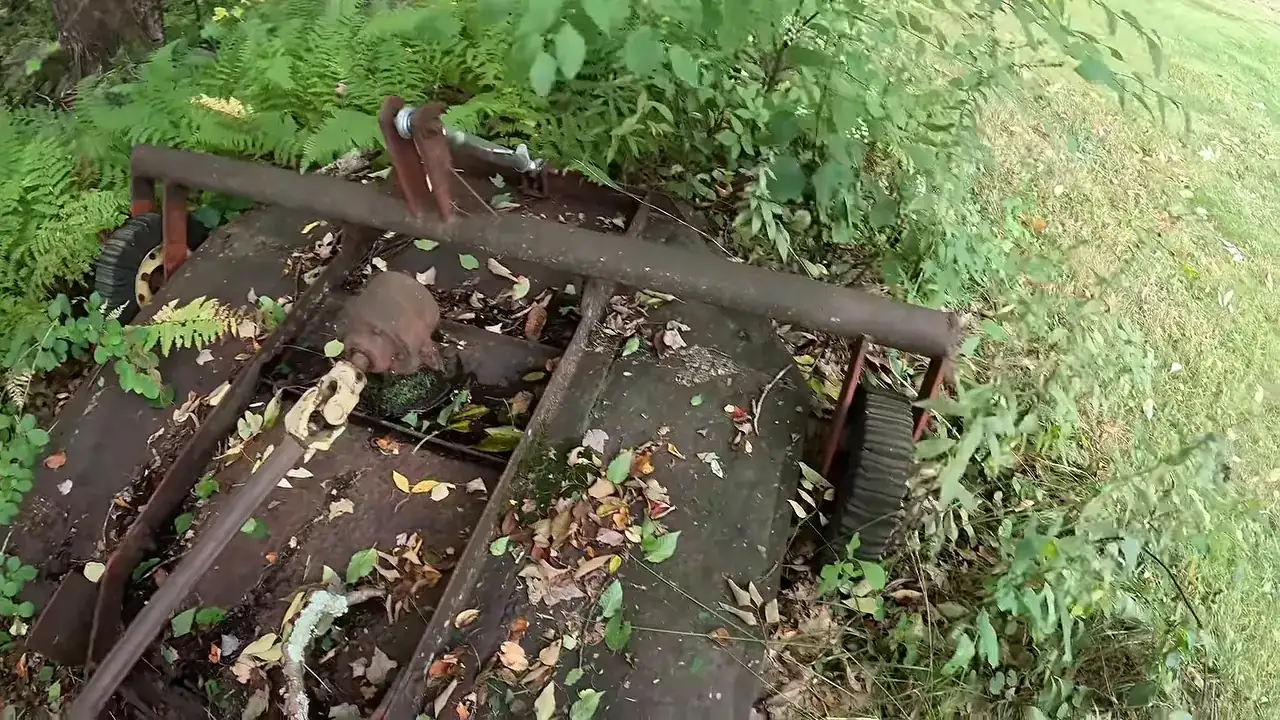
By lunch about three quarters of the first field was done. We stopped with some work left for the next morning, so we could blow the chips off the lawn and pick up the larger chunks.
Day two: a log, a hidden pipe and more old equipment
The second day started with a log to cut and move into the woods and a large brush pile in one corner. Then came more edge cleanup and the remaining stretch toward the property boundary. Here’s what turned up:
- A hidden steel pipe. A large pipe in ground we had already mulched. We hadn’t seen it, and the mulcher made contact with it.
- An old mower. It was marked with snow poles, but it was hard to see under the brush. Once cleaned off, it had a long cutting bar with pointed guards, unlike the earlier brush hog.
- Two unidentified implements. Tillage-like tools with curved metal parts. We couldn’t confirm what they were, and we dropped one while moving it.
- A compost pile. It was described as years of grass clippings and turned out to be mostly compost. We pushed it back into the woods and mulched the loose material on top.
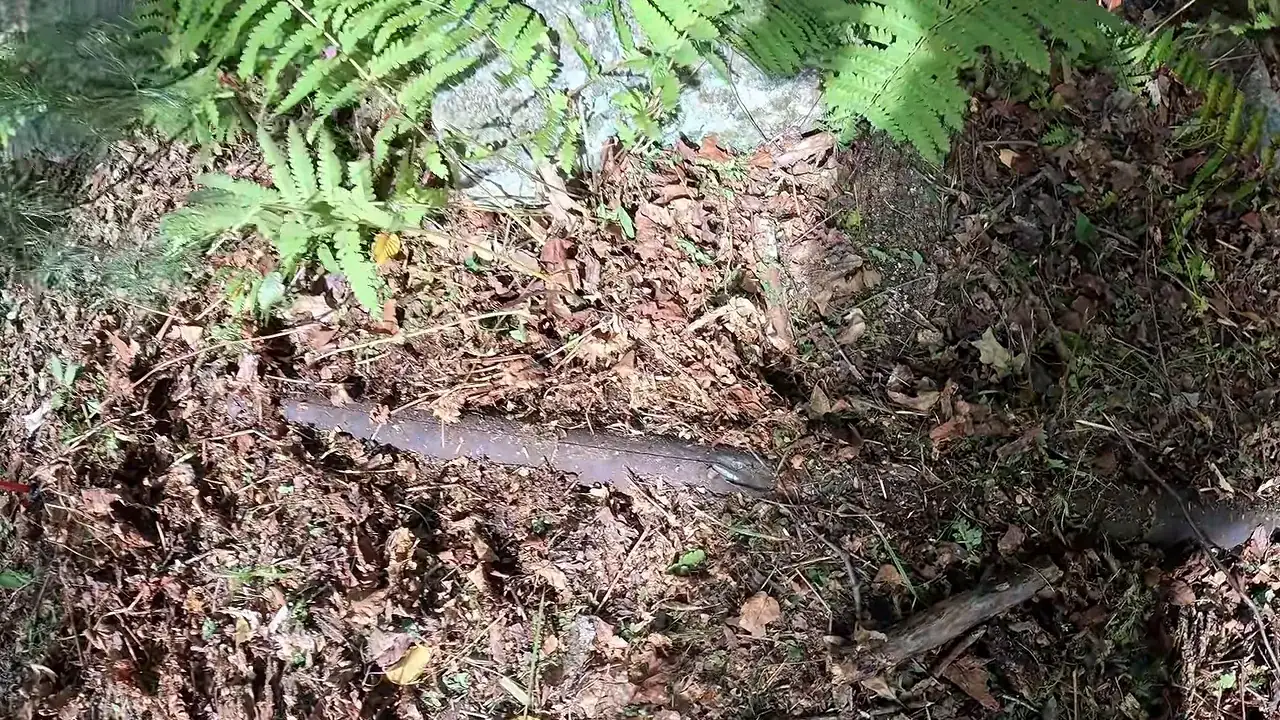
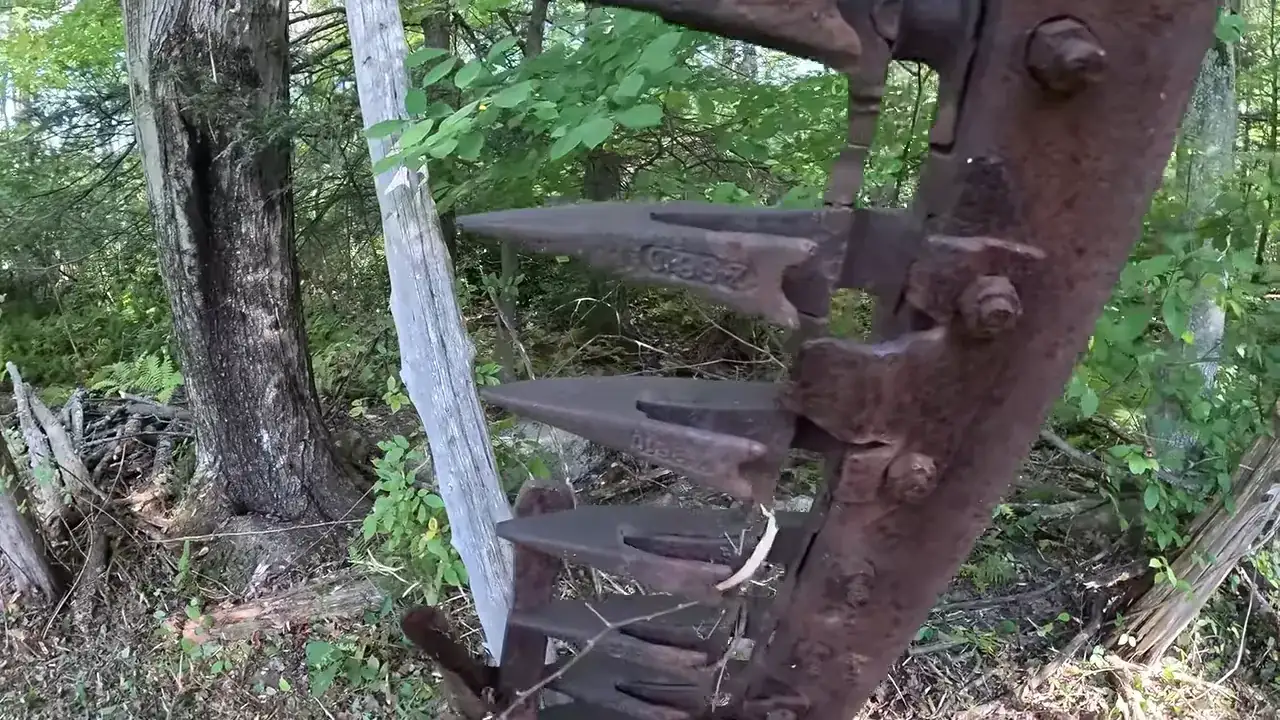
After lunch we followed the remaining perimeter out to the property boundary and stopped there, even though there was more brush beyond it.
The job’s edge was the property line, not the edge of the vegetation.
The finished edge: more visibility and access again
With the lawn cleaned up, the edge was open, with tree trunks visible and no solid band of brush. The customer told us the old equipment had been out in the open when they bought the house seven years ago. It was the first time in years they could see it again.
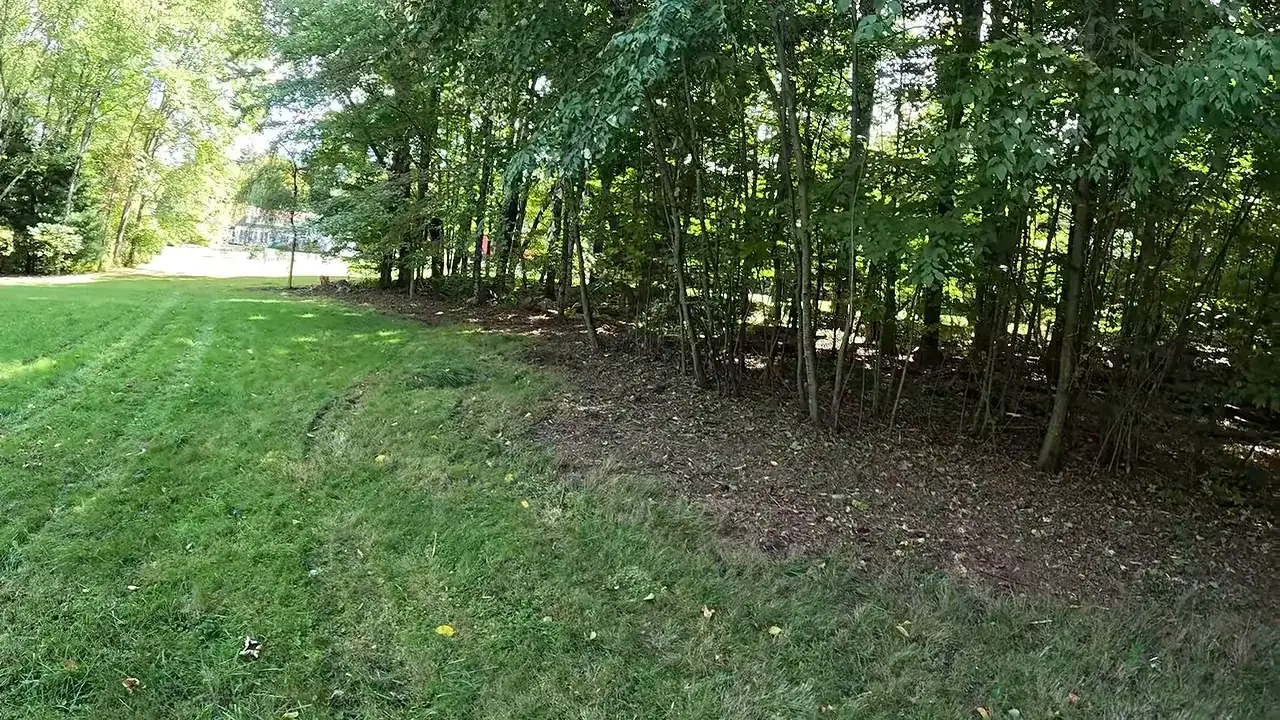
A few more notes on the finish:
- A willow tree. Vines had choked the area so badly that the customer could barely reach the base to cut them. With access cleared, they can maintain it again.
- A rocky section. One stretch had enough rocks that the finish isn’t as clean as we wanted. We’ll say so plainly.
- The scope. We stopped at the property line, following the job’s scope rather than just the vegetation line.
Selective edge work like this opens the view without taking out the forest. It also shows what a property has been hiding.
Got an overgrown edge to take back?
Tell us about your property and we’ll come take a look. Family-run, based in Barkhamsted, serving Northern CT and Southern MA.