We went back to a previous customer’s property in Burlington, CT on a cool fall morning for a day of forestry mulching. It was a selective job. The unwanted growth had to go, but the mature trees, a dogwood, the old stone walls and the rocky ground all stayed. The main goal was to open up the pond edge so the family can get to it for ice skating in winter.
Watch the time lapse on YouTube: “One Machine, Three Areas, One Day | Forestry Mulching Time Lapse”
The plan: roadside, lawn edge and pond
We ran our Kubota KX040-4 excavator with an Indeco IMH4 mulcher head and split the day across three areas:
- The roadside: open up the space between the mature trees, cut back invasive brush and vines, and limb up a large spruce.
- The lawn edge: clear the growth beyond the stone wall and an overgrown corner near a small drainage ditch.
- The pond: take out brush and saplings, trim aspen limbs and thin the bushes crowding the edge.
Walking the property first made it clear what stays and what goes. The dogwood stays. The burning bush goes.
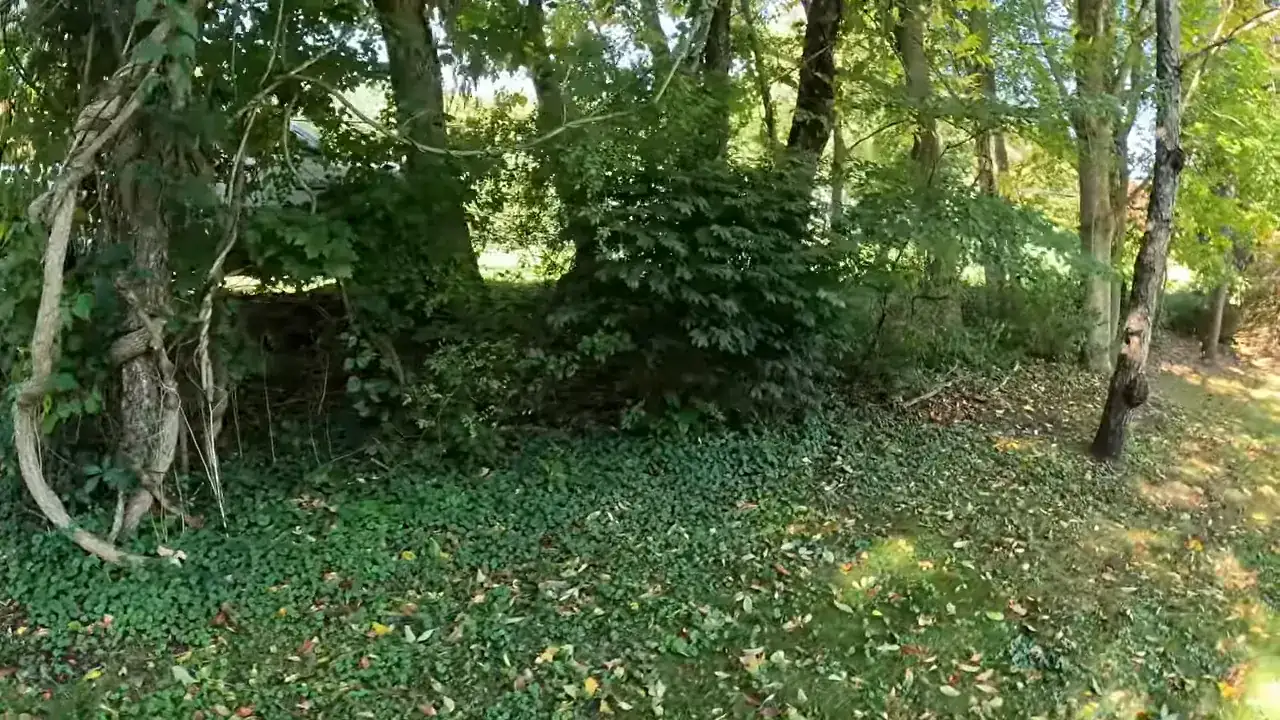
Opening up the roadside without clearing out the trees
Brush between mature trees can’t be taken out in one continuous pass. We worked through the accessible gaps with the excavator and mulcher, handling the understory and the tangled vines. By lunchtime the roadside was much more open, with a clear view between the trunks. The customer will finish a few spots themselves.
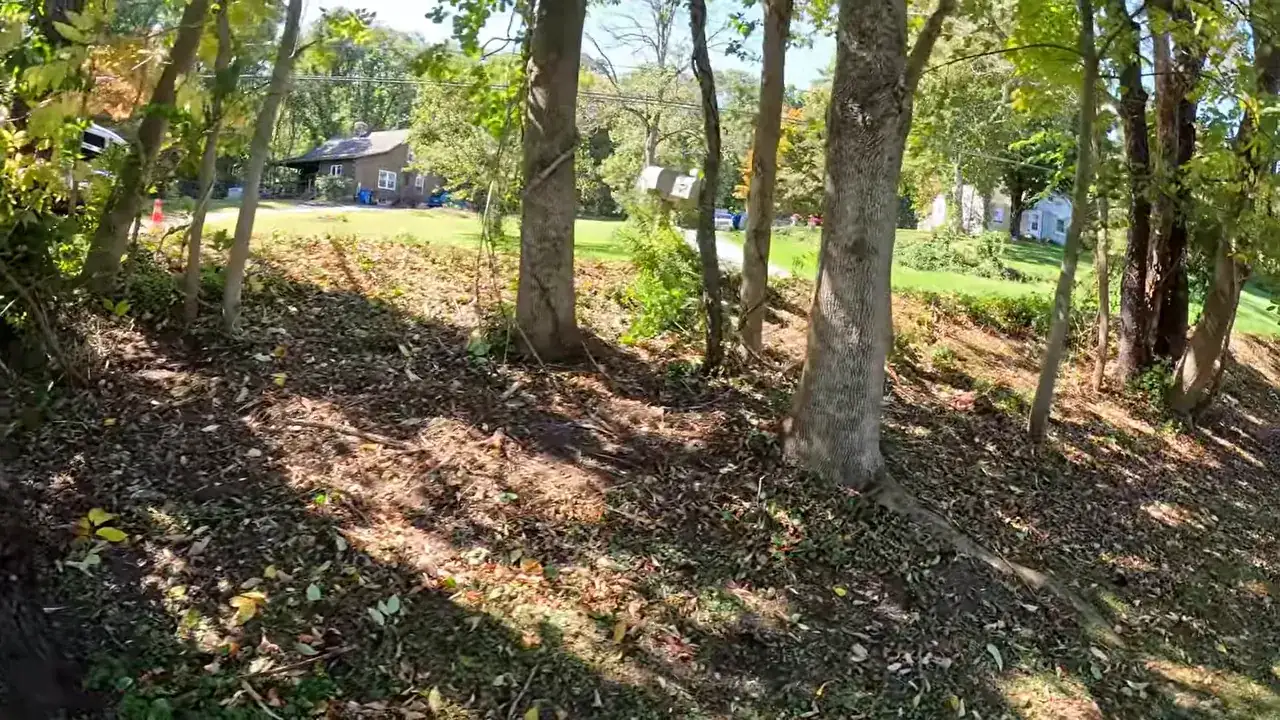
Selective mulching means working around what you want to keep, not through it.
The vines were more than a cleanup problem
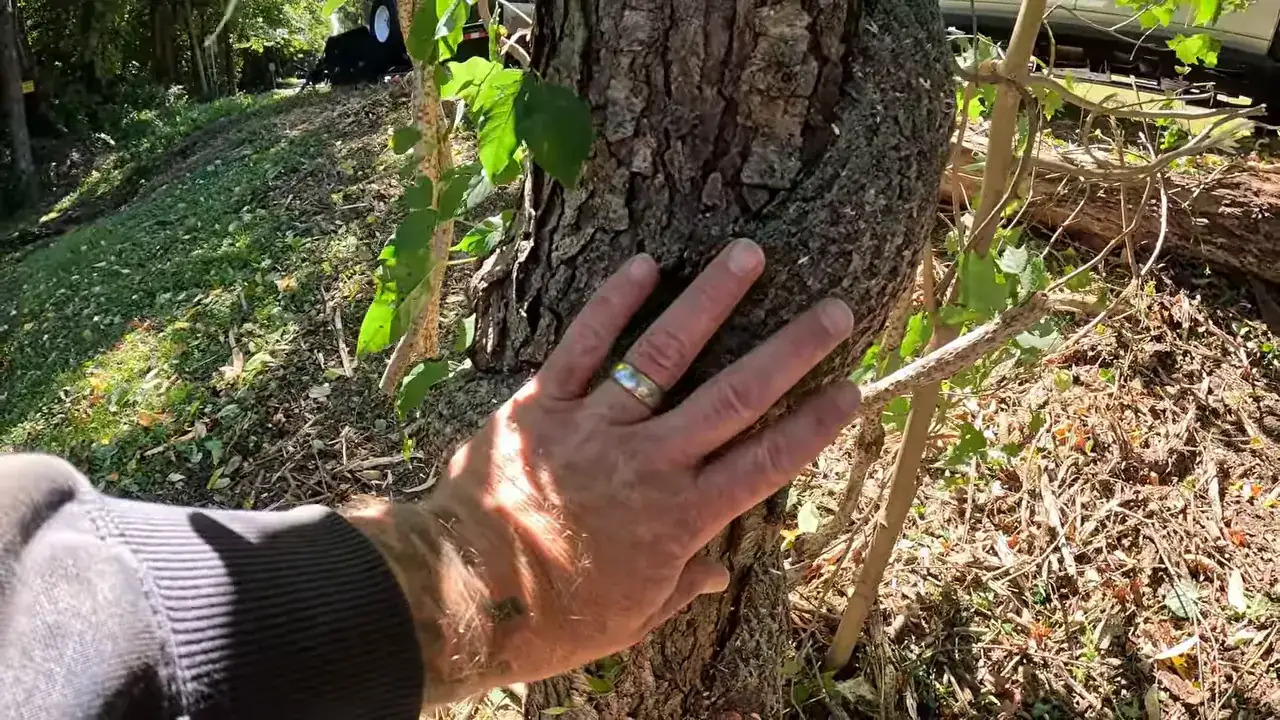
Along the road we were cutting multiflora rose, wisteria and bittersweet, with some poison ivy mixed in. One tree had a vine wrapped so tightly around its trunk that the tree had grown around it. Climbing vines can strangle a tree, so getting them under control matters for more than looks. The long, rope-like vine material bent rather than snapped, which makes it a stubborn thing to cut.
For help identifying invasive plants in Connecticut, the Connecticut Invasive Plant Working Group is a good local reference.
Returning to ground we cleared three years earlier
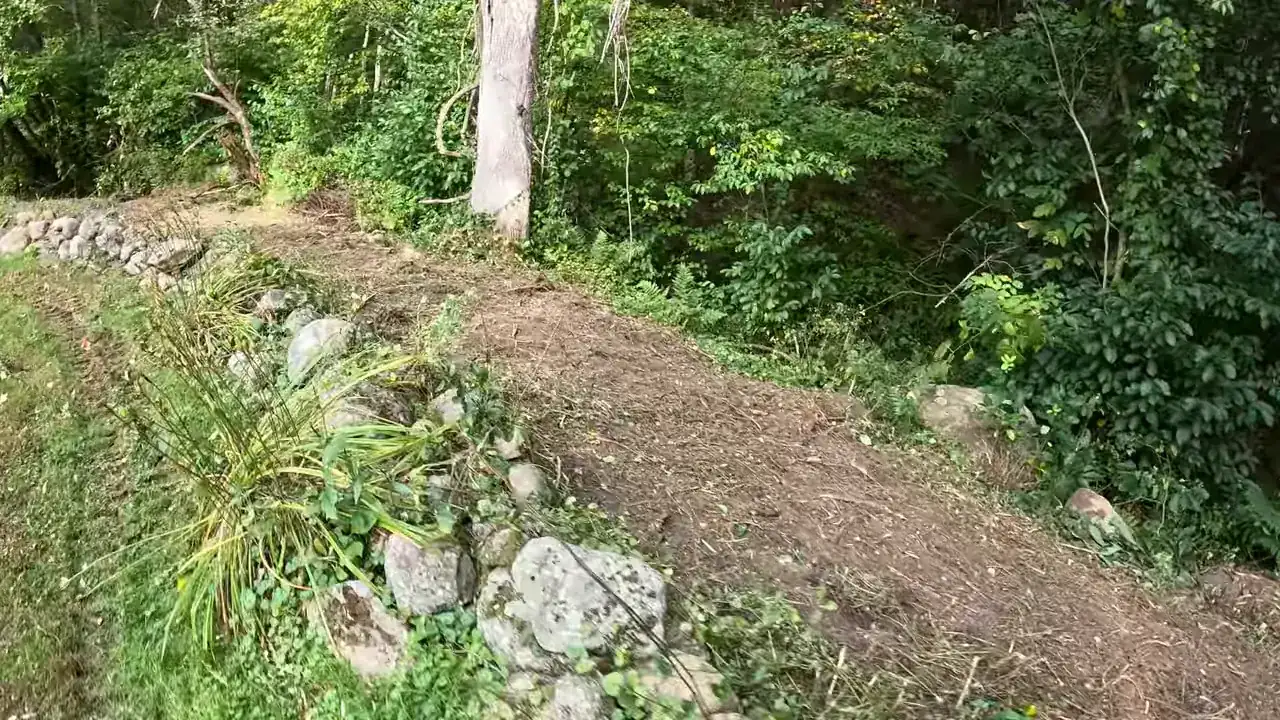
We first cleared this area about three years ago, and the homeowner has kept the easy-access ground maintained. Beyond the stone wall it’s very rocky, and the growth had come back some, helped along by the shade. We worked along the wall and into the pockets the machine could reach. The homeowner can keep up the easy side, but the rougher section will need another visit from the machine.
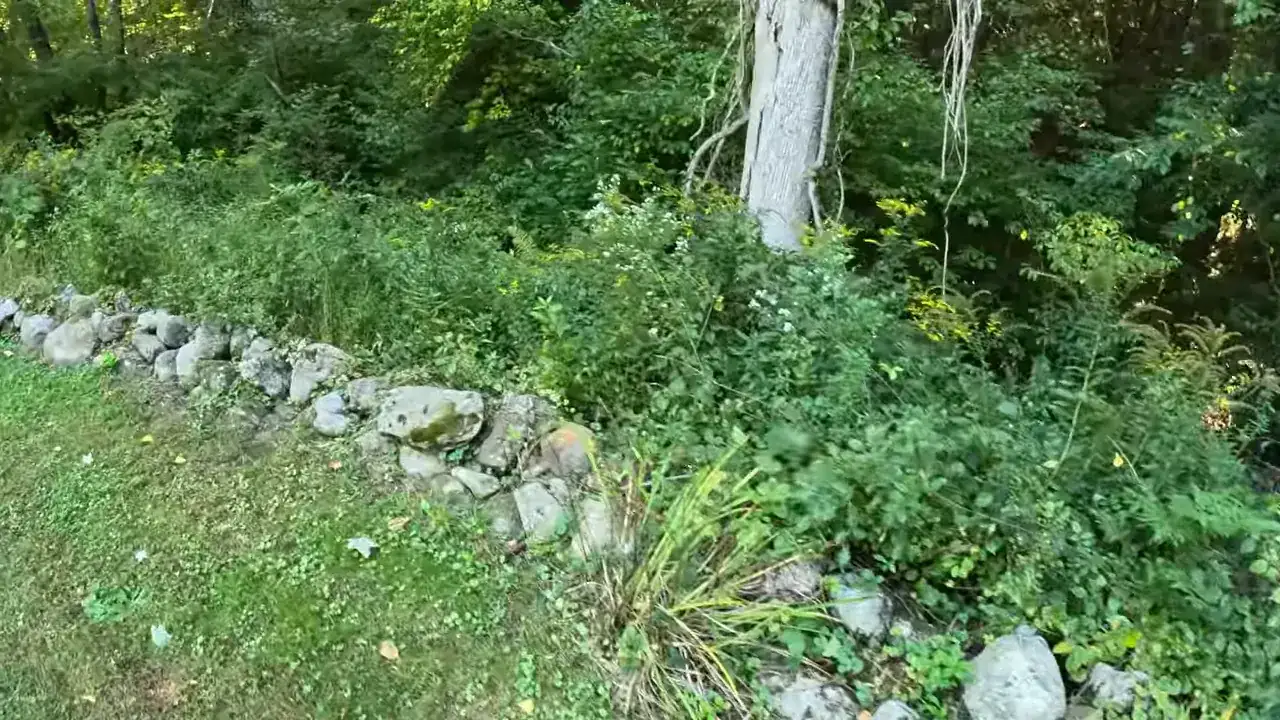
We also cleared the overgrown corner near the lawn and the drainage ditch, as far as we could reach.
The main priority: opening up the pond edge
The pond was the focus of the day. Brush, saplings and tall growth had crowded the edge between the lawn and the water. We cleared growth, removed aspen limbs and thinned the bushes. The accessible bank is much more open now, but we didn’t clear the whole shoreline. Some material at the water’s edge was out of reach, and some of the “grass” along the edge turned out to be floating vegetation.
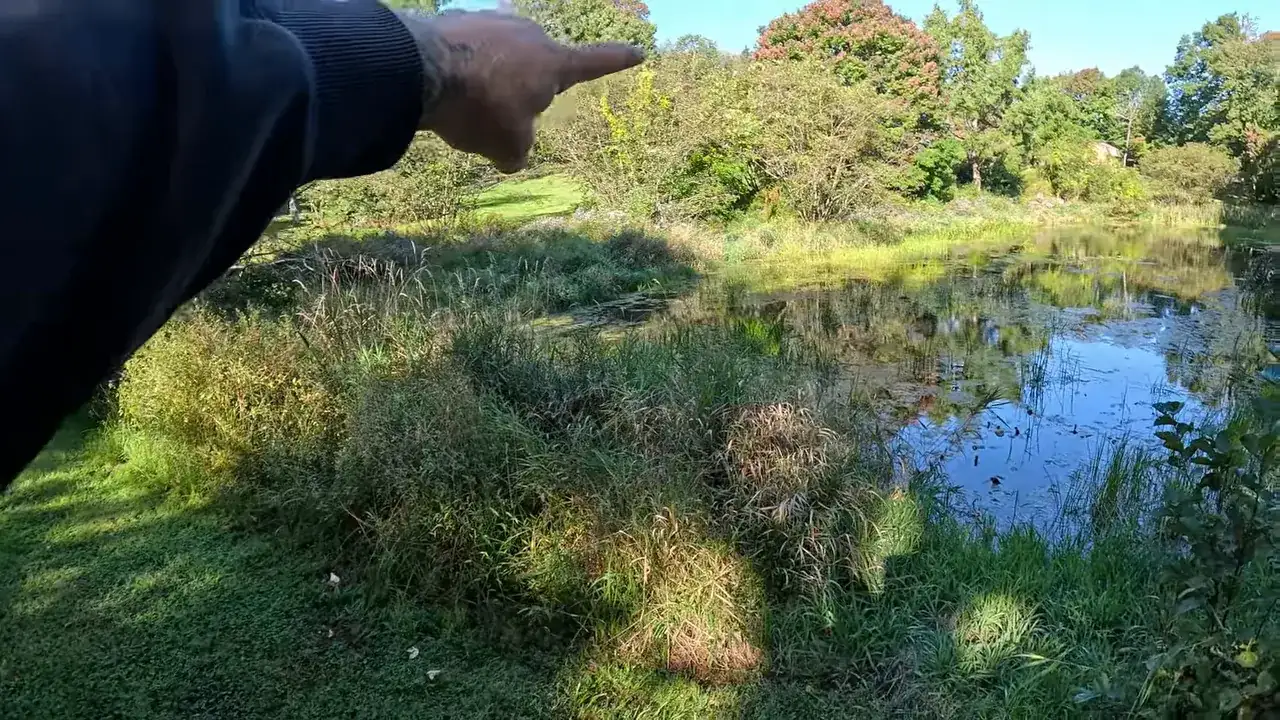
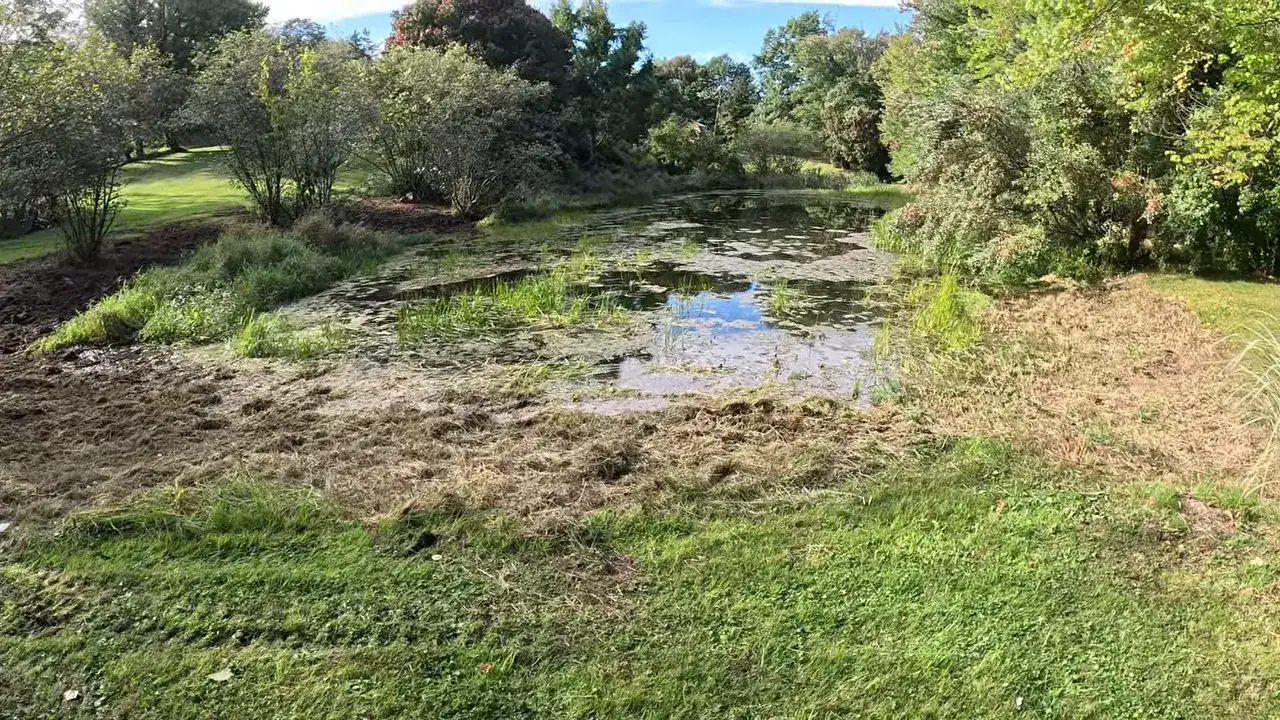
Some of a shoreline job is about knowing where the machine should stop.
A little extra work on an old mulch pile
The customer also had a large, firm mulch pile and asked us to move it so they could spread it behind the stone wall. That was a separate task from the brush cutting.
A good day back at a familiar property
By the end of the day the roadside was more open, the growth along the lawn and stone wall was reduced, and the pond edge was less crowded. That’s selective forestry mulching: keep what belongs, take out what doesn’t, and work within the limits of the ground and the machine. We also like coming back to repeat customers and seeing how well they’ve kept up what we started.
Got ground that needs taking back?
Tell us about your property and we’ll come take a look. Family-run, based in Barkhamsted, serving Northern CT and Southern MA.