This job started with a pretty straightforward plan: trim back the brush along the lawn, take off some lower branches, and reclaim the edge of the backyard. The growth kept creeping into the grass, and the homeowner wanted it knocked back.
Watch the time lapse on YouTube: “Once They Saw What It Could Do, They Wanted More”
Then we started opening things up. Once the customer saw what the machine could do, the priorities changed. Instead of moving on to the front yard, we spent the day pushing farther into the back, uncovering a creek, opening up around an unusual willow tree, and making room the family could actually use.
By the time I finished, I figured we had almost doubled their usable property. Not a measured acreage claim, just a big difference in how much of their own backyard they could get into.
The starting point: brush taking over the lawn’s edge
The first walk around the property showed plenty to keep us busy. There were lower tree branches to remove, a smaller patch to clip back, and then a long stretch of overgrowth wrapping around the backyard.
It was the usual mix of tangled growth:
- Multiflora rose
- Blackberry
- Jewelweed
- Bittersweet
- Vines wrapped through the shrubs and trees
Some sections looked like one solid wall of green. You could see where the maintained lawn stopped, but it was much harder to see what was behind the brush.
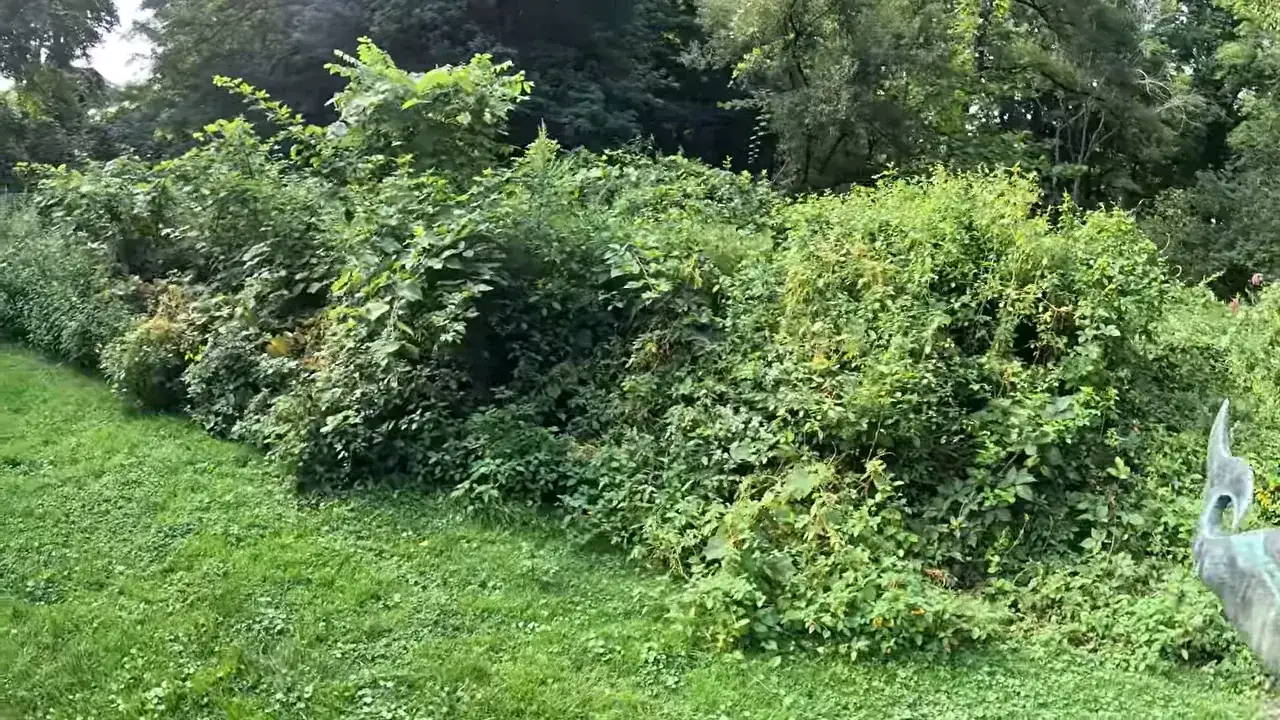
The goal at this stage was simple: work around that edge and get the growth back out of the yard. There was more work available than we were necessarily going to reach, so we would see how far we could get through the day.
If you are sorting out similar growth on your own property, the Connecticut Invasive Plant Working Group is a useful regional reference for plant identification and invasive plant information. Knowing what is in the tangle is a better starting point than treating every green patch as the same thing.
The equipment: an excavator with a forestry mulcher
For this job, I used the Kubota KX040-4 excavator with an Indeco IMH4 forestry mulcher head. That was the setup doing the brush clearing and processing the cut material right there on the property.
Rather than cutting everything down and hauling away piles of debris, we mulched it on-site. As the standing brush came down, the cleared ground became visible beneath it, with the processed material left behind.
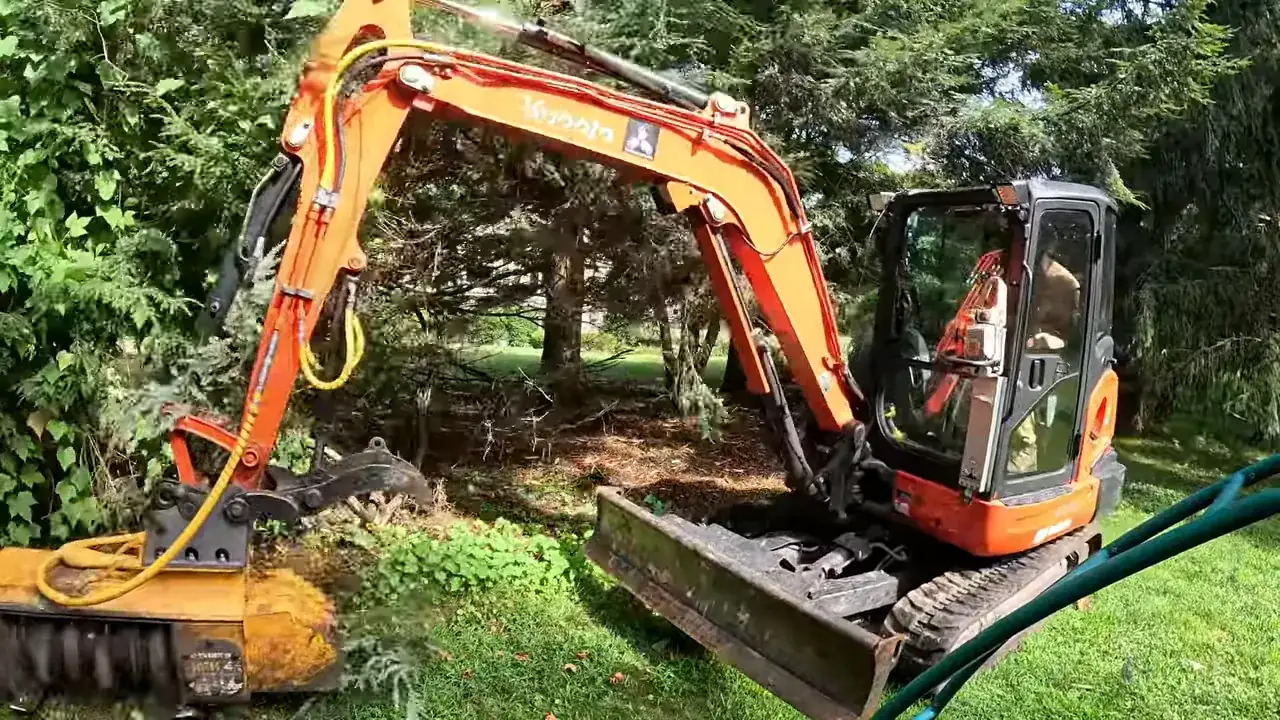
I started with the smaller areas and worked along the backyard perimeter. The difference became obvious as those thick patches turned into open ground between the remaining trees. What had looked like the end of the backyard was really just the beginning of the overgrowth.
A conversation with the customer changed the direction
Partway through, I stopped for a quick conversation with the homeowner. We had been following the original direction, but there was a creek farther back, and she wanted to reclaim some space toward it.
That gave us a new priority. One of the next things to tackle was a large burning bush tangled in vines. From there, we could keep working back rather than just continuing to tidy the lawn’s edge.
This was not a case of clearing farther and asking afterward. The customer and I checked the progress together and adjusted the plan. Once she could see what was opening up, she had a clearer idea of where she wanted the work to go.
Eventually, the front-yard work dropped out of the day’s priorities altogether. The backyard offered more of what she wanted, so that was where we stayed.
Opening access to the creek
As we got farther back, the creek became a real feature of the property instead of something tucked behind an inaccessible mess. It ran through their land in both directions, and the homeowner’s goal was pretty down-to-earth: she wanted her kids to be able to get back there and play.
That changed the purpose of the clearing. We were no longer just making the edge look neater. We were opening access to a part of the property the family wanted to use.
After another check-in, we picked a direction toward a larger tree farther back. I expected that stretch to take up the rest of the day, and it became the next area to work through.
By the final walk around, you could follow the creek through the newly opened space. There was even an old makeshift bridge back there. I could only guess who had put it together or how long it had been there, but it was another detail that became easier to notice once the brush was out of the way.
Uncovering the willow without losing its character
One of the best features we exposed was a willow tree with a funny arch to it. Before the clearing, that shape was mixed into all the surrounding growth. Afterward, the tree stood out over the open ground.
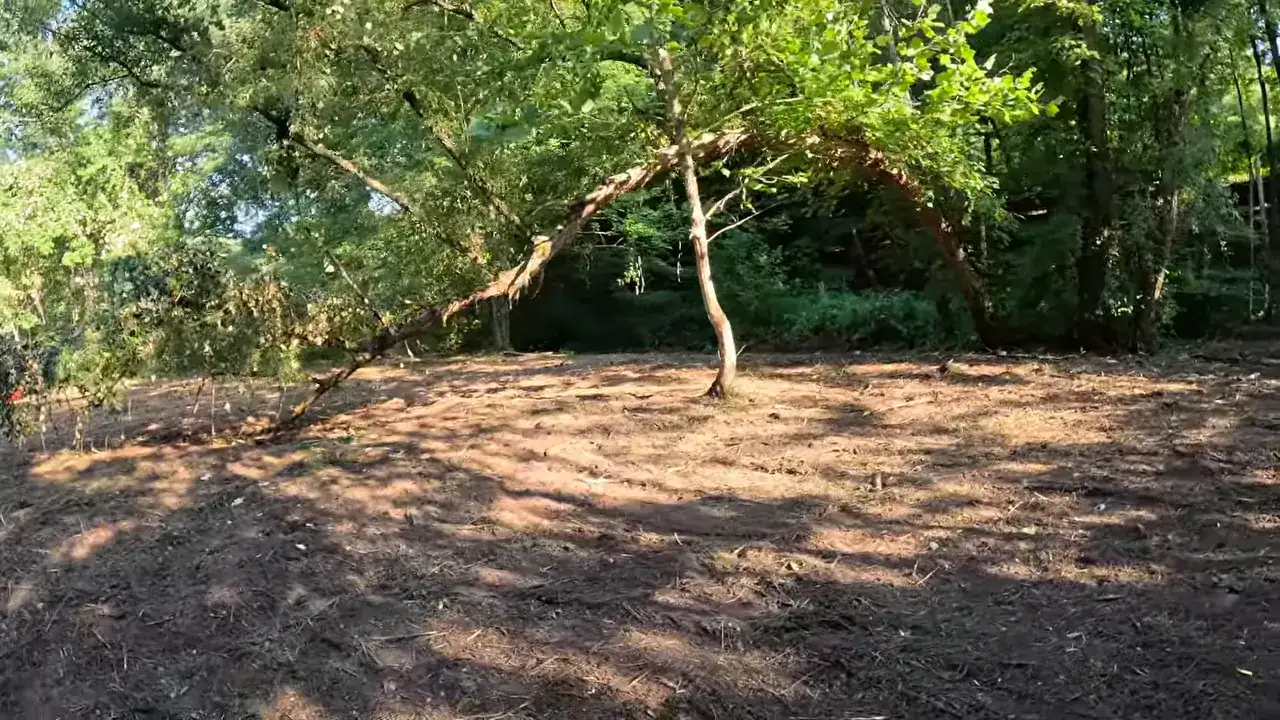
That is an important distinction with a job like this. We did not need to remove every tree to make a useful space. Much of the transformation came from taking out the tangled growth around the trees that were already there.
There was still poison ivy visible in the greenery behind that area, which I pointed out during the final walk. Opening up the ground did not mean every remaining patch of vegetation was ready to walk into.
The result: more usable yard and more choices
By the end of the day, we had opened one side of the backyard, worked farther back toward the creek, and carried the clearing across to the other side. The original lawn now met a much larger area of open, mulched ground instead of a dense brush barrier.
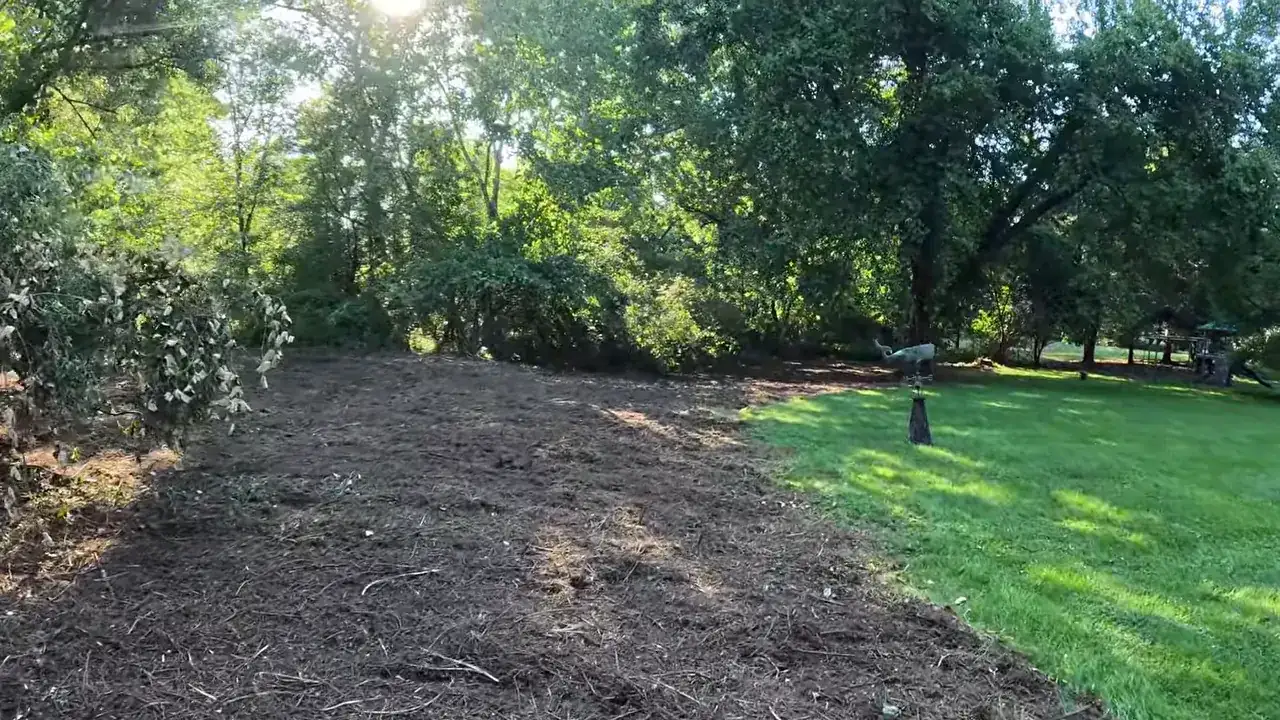
This was still a clearing job, not a finished lawn installation. Grass might be the next step. The homeowner might decide to do something else with it. That part had not been settled.
But now she could see the space, get into it, and decide. A job that started as a trim around the edges turned into a full day of backyard reclamation, with the creek and that arched willow becoming part of the yard again.
That was the real result: the customer had choices she did not have at the start of the day.
Got a backyard edge that keeps creeping in?
Tell us about your property and we’ll come take a look. Family-run, based in Barkhamsted, serving Northern CT and Southern MA.